Key takeaways from the report
The first is an acquisition: a sponsor buys an existing property, sometimes renovates it, and operates it.
The sponsor controls a site, entitles it, designs the community, builds it and leases it.
Every project is different, but most Class A multifamily developments move through the same phases:
Two ways to own apartments: buy or build
Most private multifamily investments fall into one of two camps. The first is an acquisition: a sponsor buys an existing property, sometimes renovates it, and operates it. The purchase price is set by the market, so the investor starts at fair market value.
The second is ground-up development. The sponsor controls a site, entitles it, designs the community, builds it and leases it. The investor's basis is the total cost to create the property: land, hard costs, soft costs, financing costs and reserves. When the project is underwritten well, that cost sits below the value of the completed, leased community. That spread between cost and value is the core reason experienced investors allocate to development.
The stages of a development project
Every project is different, but most Class A multifamily developments move through the same phases:
1. Site selection and control. The developer studies job growth, household formation, school districts, traffic patterns and competing supply, then puts a site under contract.
2. Entitlements and design. Zoning, site plans, civil engineering and architecture are completed. Unit mix and amenities are matched to the renter profile in the submarket.
3. Capitalization and closing. The sponsor raises equity, closes construction financing and funds the reserves the project needs, including the interest reserve.
4. Construction. Vertical construction typically takes the longest of any phase. Buildings are often delivered in phases so leasing can begin before the final building is finished.
5. Lease-up. The leasing team fills the community and moves it toward stabilized occupancy.
6. Stabilization and exit. Once operations are stable, the sponsor can hold, refinance or sell, depending on the business plan in the offering documents.
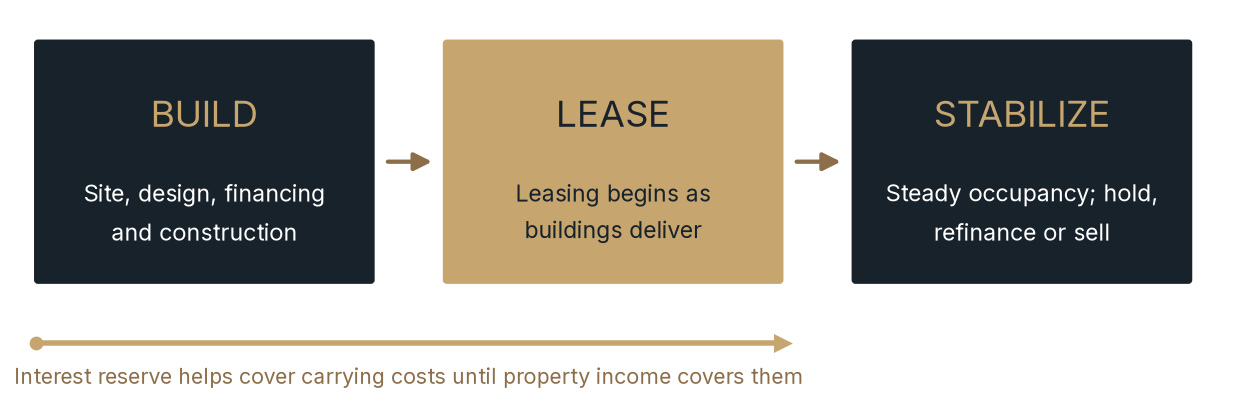
Chart Summary and Key Values
Ground-up development moves from build to lease to stabilize. Build includes site work, design, financing and construction. Leasing starts as buildings deliver; stabilization means steady occupancy, followed by holding, refinancing or selling. An interest reserve helps cover carrying costs until property income does so. No specific duration, occupancy target or return is assigned in the diagram.
The three broad parts of a development: build, lease and stabilize. Durations vary by project. Graphic: Ascendant Development.
Why investors choose development
A new, competitive product. A new Class A community is built for today's renter, with modern floor plans, in-unit laundry, smart-access technology and amenity packages that older properties struggle to match.
Value creation at the start. Acquisitions buy at fair market value. Development builds to a cost below fair market value, so value is created through execution rather than by finding a seller willing to accept a discount.
Fewer surprises from deferred maintenance. New construction comes with modern building systems and warranties, so the first years of operations generally avoid the large capital projects older properties often need.
Timing the supply cycle. Multifamily supply moves in waves. When new construction starts fall, communities that deliver a few years later can lease into a market with less competing product. The U.S. Census Bureau's New Residential Construction series tracks starts and completions nationally1.
H Y P OT H E T I CA L I L L U S T R AT I O N : C O S T V E R S U S VA L U E
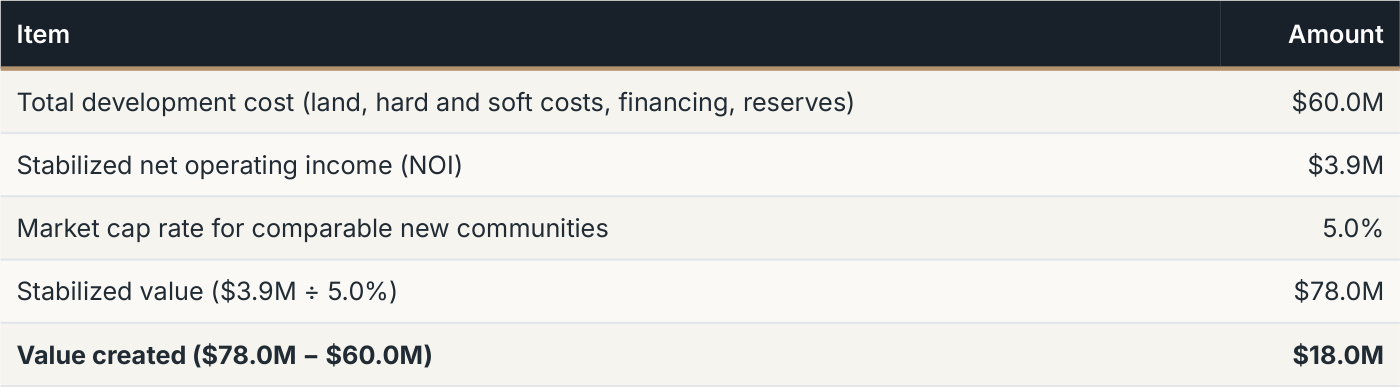
Table Summary and Key Values
| Item | Amount |
|---|---|
| Total development cost (land, hard and soft costs, financing, reserves) | $60.0M |
| Stabilized net operating income (NOI) | $3.9M |
| Market cap rate for comparable new communities | 5.0% |
| Stabilized value ($3.9M ÷ 5.0%) | $78.0M |
| Value created ($78.0M − $60.0M) | $18.0M |
The $18.0M of value created equals 30% of total cost ($18.0M ÷ $60.0M). If costs run higher, NOI comes in lower or cap rates rise, that margin shrinks.
Hypothetical example for illustration only. Not a projection or the terms of any offering.
What makes development different, and how good sponsors manage it
Development has its own risks, and an investor should understand each one.
Construction cost and schedule. Materials, labor and weather can move budgets and timelines. Sponsors manage this with contingencies, competitive subcontractor bids and fixed-price construction contracts.
Interest cost during construction. A project earns no rent while it is being built. Disciplined sponsors fund a conservative interest reserve at closing so that carrying costs are covered through construction and lease-up.
Lease-up pace. New communities must win residents from competing properties. Location, product quality and an experienced leasing team matter.
Exit assumptions. The value at completion depends on the market at the time. Disciplined sponsors underwrite reasonable exit cap assumptions rather than relying on market improvement.
Good sponsors align the incentives of their construction company with the goals of the development project.
How passive investors participate
In a typical private development offering, the sponsor forms an entity that owns the project. Accredited investors buy LP or LLC interests alongside the sponsor. The offering documents describe the business plan, the reserves, the fee structure, how and when distributions are paid, and the risks. Development is a longer-horizon investment: distributions generally begin after the property is leased, not during construction.
Questions to ask before investing in a development deal
How many projects has the sponsor completed from land to stabilization, and in which markets?
Is the interest reserve fully funded at closing, and what does it cover?
Who is the general contractor, and how is the construction price set?
What contingency is included in the budget?
What exit cap assumption is used, and how does it compare with recent trades?
How often will investors receive construction and leasing updates?
Common misconceptions about development
"Development is speculative." Development carries execution risk, but a well-capitalized project is not a bet on rising prices. The value case rests on building to a cost below what comparable new communities are worth today, using current rents and reasonable exit cap assumptions. Market improvement is upside, not the plan.
"New construction always leases slowly." Lease-up pace depends on the submarket and the competing pipeline. A new Class A community delivered into a market where construction starts have fallen faces less competition for renters than one delivered at the peak of a supply wave. That is why timing the supply cycle matters.
"Cost overruns are inevitable." Costs can move, which is why budgets carry contingencies and why the construction contract structure matters. Fixed-price or guaranteed-maximum contracts, competitive subcontractor bids and lender cost-consultant review all help keep the budget on track.
"There is nothing to report until the property is done." Construction is a period of constant, visible progress. Investors should expect regular updates with photos, percent complete, budget versus actual and schedule, followed by monthly leasing reports once units begin to deliver.
Where development fits in a portfolio
Many investors build their portfolios around publicly traded stocks and bonds. Those markets offer daily liquidity, but they are priced continuously by the same broad market forces, and in periods of stress stocks and bonds can fall together.
Ground-up multifamily development is an alternative investment that can potentially broaden diversification beyond a traditional stock and bond portfolio. A development's value is driven largely by local factors, such as construction execution, renter demand in a specific submarket and the supply of competing new units, rather than by daily movements in public markets. Because private real estate is not traded on an exchange, it is not repriced minute to minute, and its performance may have lower correlation with public stocks and bonds.
Development also offers a distinctive risk and reward profile. Because the investor's basis is the cost to build rather than fair market value, a well-executed project has the potential for significant upside as value is created through construction and lease-up. Features such as a cost basis designed to sit below stabilized value, a fully funded interest reserve, construction contingencies and disciplined underwriting are intended to help manage risk, but they do not eliminate it. In addition, development interests are illiquid, distributions generally begin only after lease-up, and investors can lose some or all of their capital. Investors should commit only capital they will not need during the expected hold period.
The bottom line
Ground-up development lets investors own a new Class A community at a cost basis designed to sit below its finished value. It asks for patience, and it rewards investors who choose sponsors with a track record, well-funded reserves and aligned construction teams.
A selection of Ascendant communities
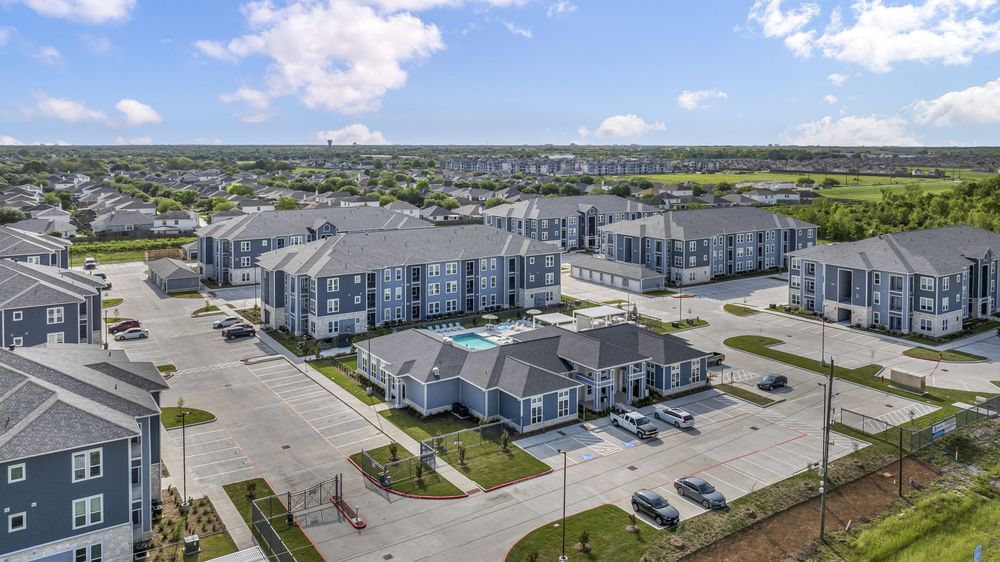
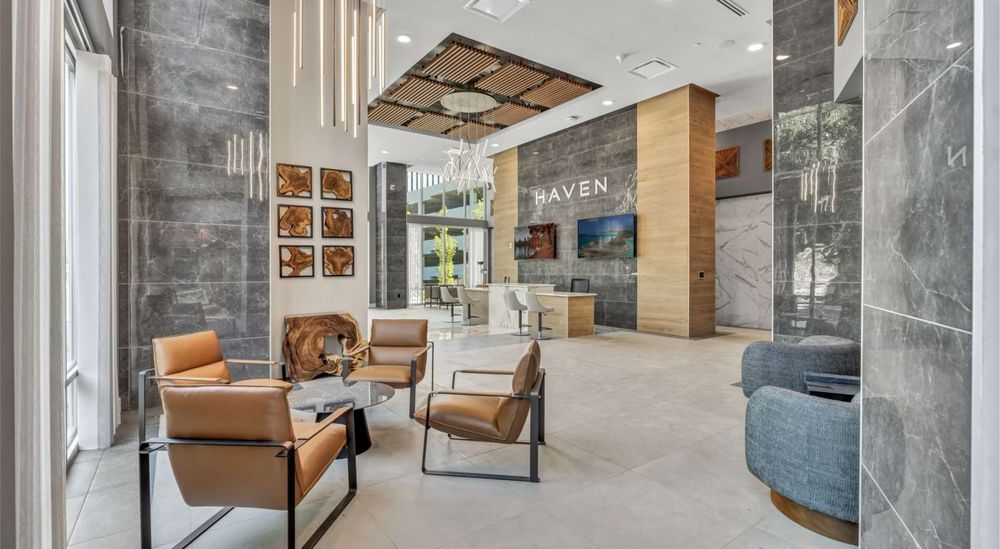
Haven at Westgreen, Katy, TX · garden Haven at Mission Trace, Richmond, TX · garden
Join the Ground-Up Multifamily Development Investor List
To talk through development investing with the Ascendant team, visit https:// www.ascendantdevco.com/invest-with-us or call Ascendant Development at 713.600.9393.
Join the Ground-Up Multifamily Development Investor List
Sign up for Ground-Up Multifamily Development investor updates →
Scan the code to join the Ground-Up Multifamily Development Investor List.
S O U R C E S
1. U.S. Census Bureau, New Residential Construction (housing starts and completions). https://www.census.gov/construction/nrc/ index.html
I M P O R TA N T D I S C L O S U R E S
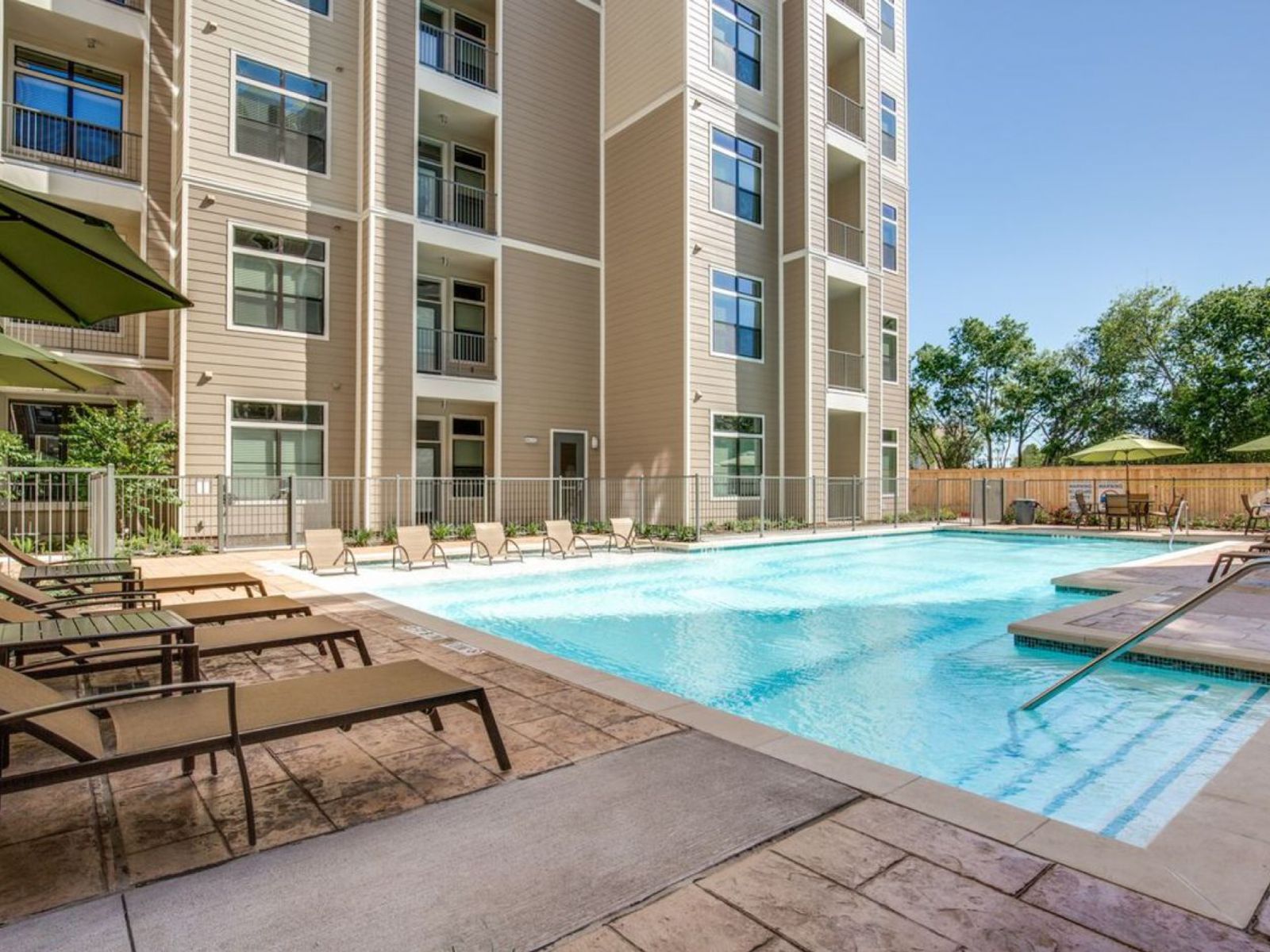
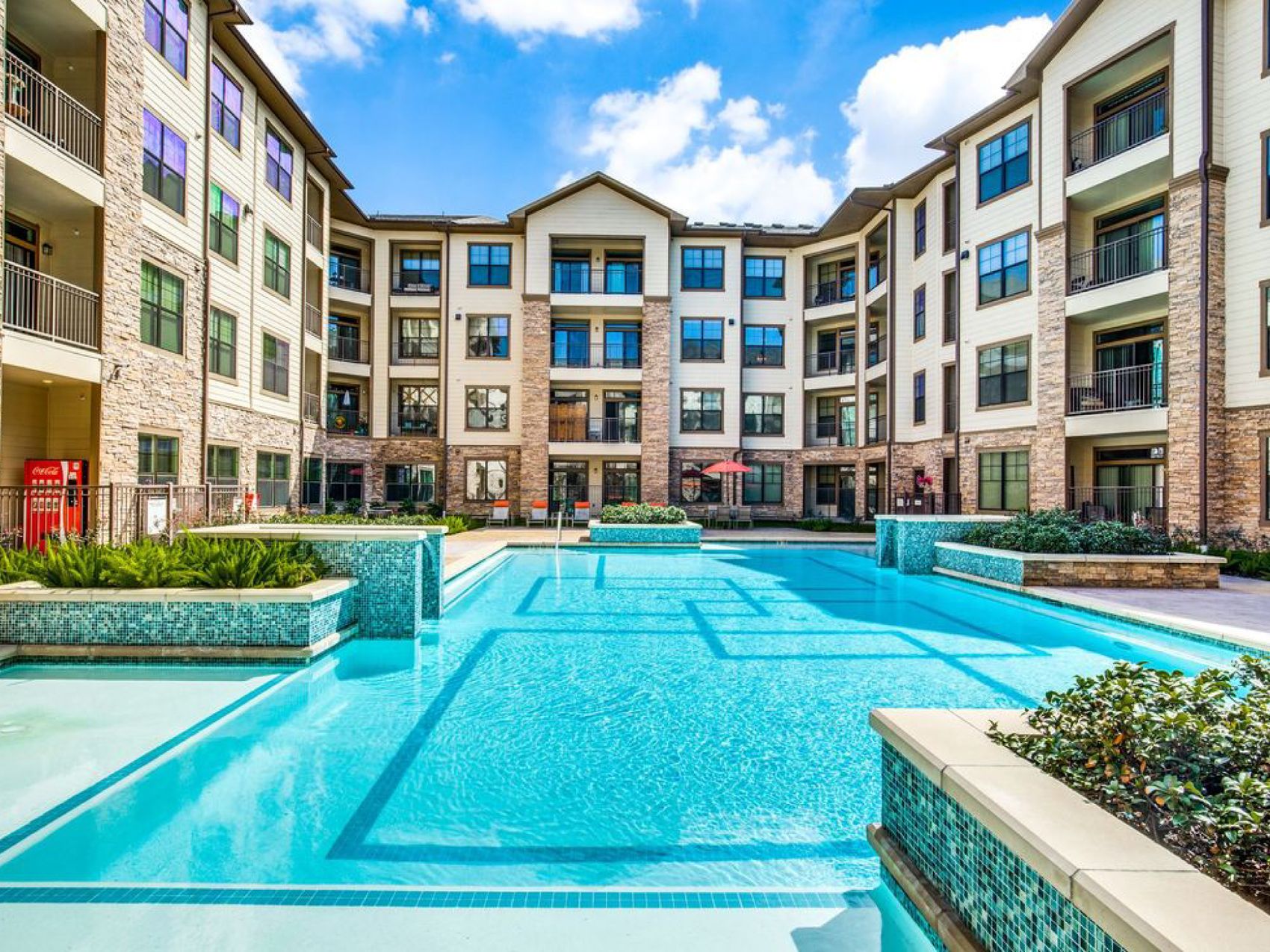
This article is for educational purposes only and is not an offer to sell or a solicitation of an offer to buy any security. Any offering by Ascendant Development or its affiliates is made only to verified accredited investors under Rule 506(c) of Regulation D through definitive offering documents, which should be read in full, including the risk factors. Real estate development involves risk, including the possible loss of principal, and is illiquid. Nothing here is tax, legal or investment advice; consult your own advisors. Forward-looking statements are not guarantees. Hypothetical examples are for illustration only and are not projections or the terms of any offering. Photographs show completed or existing Ascendant projects. They are shown to illustrate the firm's work and do not represent any specific current offering.
Haven at Main, Houston, Texas.
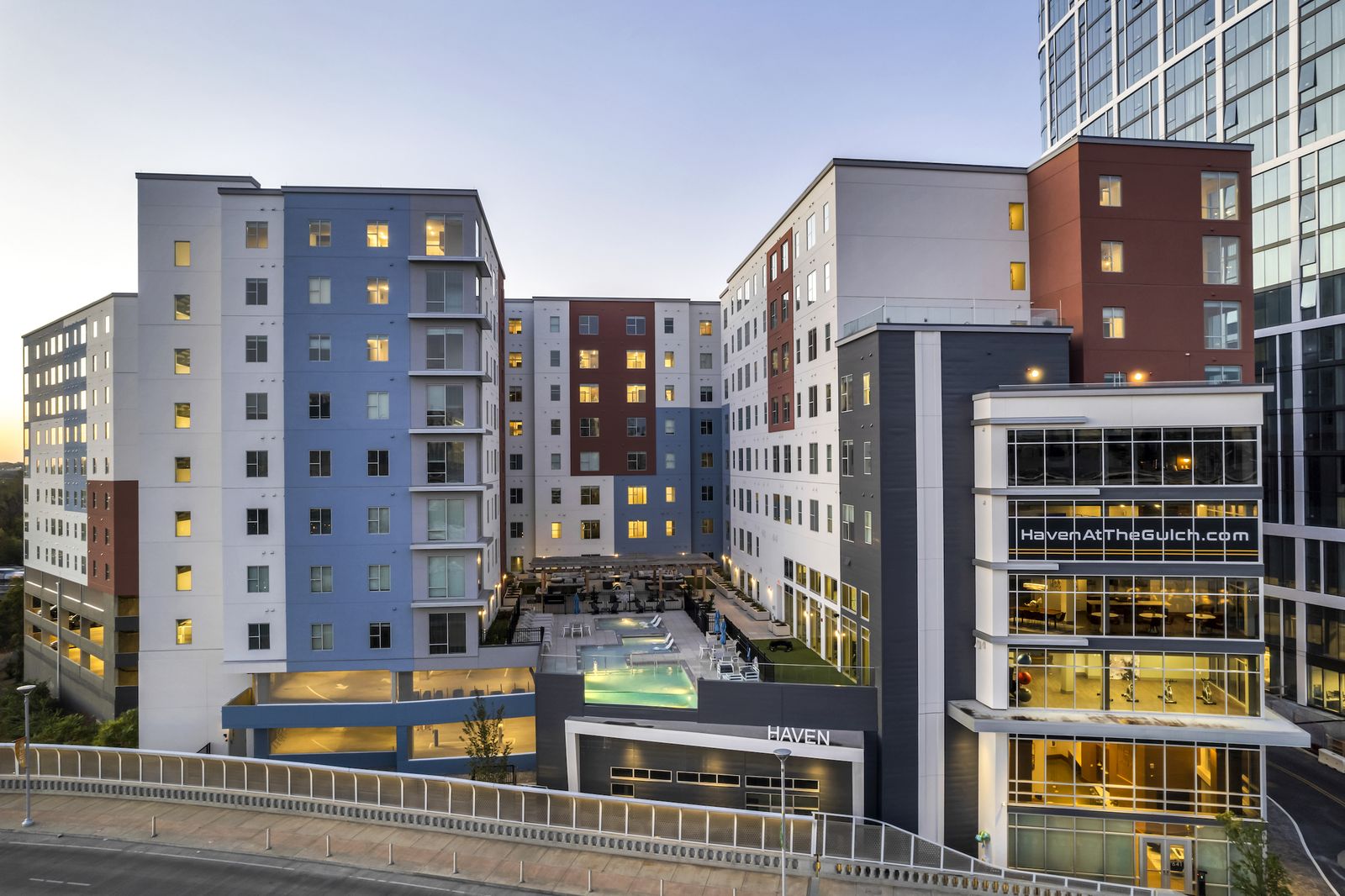
Haven at the Gulch, Nashville, Tennessee.
For educational purposes only. Not an offer to sell or a solicitation of an offer to buy any security. Any offering will be made only to verified accredited investors under Rule 506(c) of Regulation D through definitive offering documents. Past performance does not guarantee future results.